Read the Privacy Policy



Brightens Skin & Neutralises UV Damage Every Morning
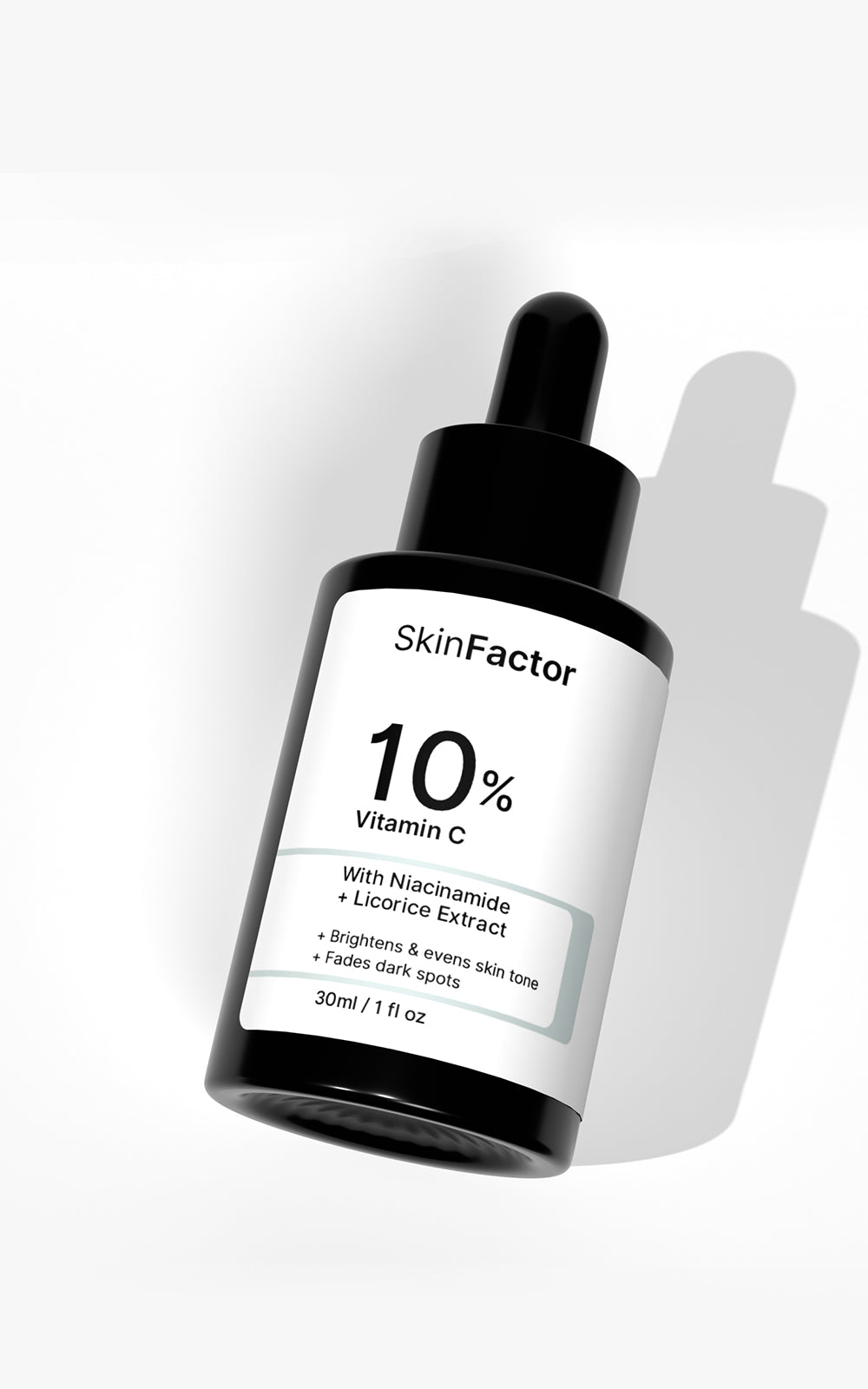
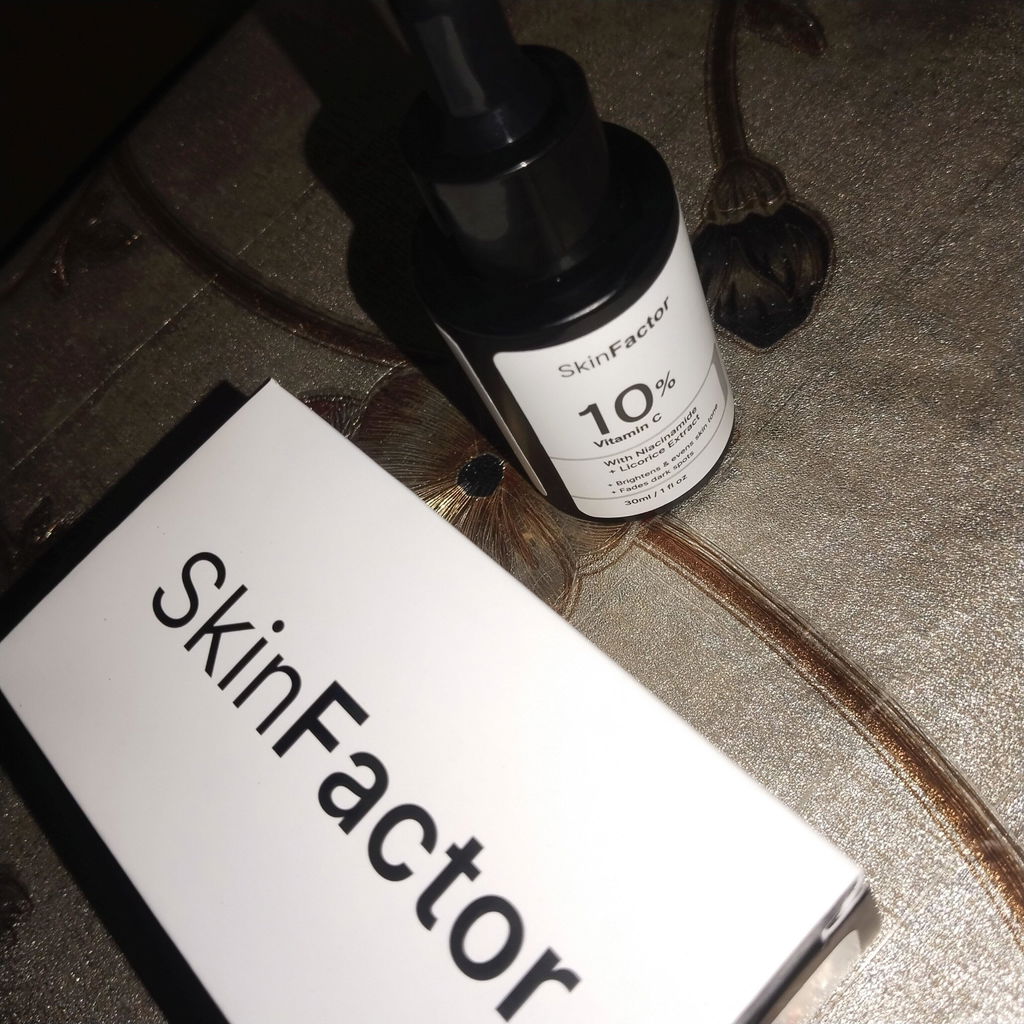
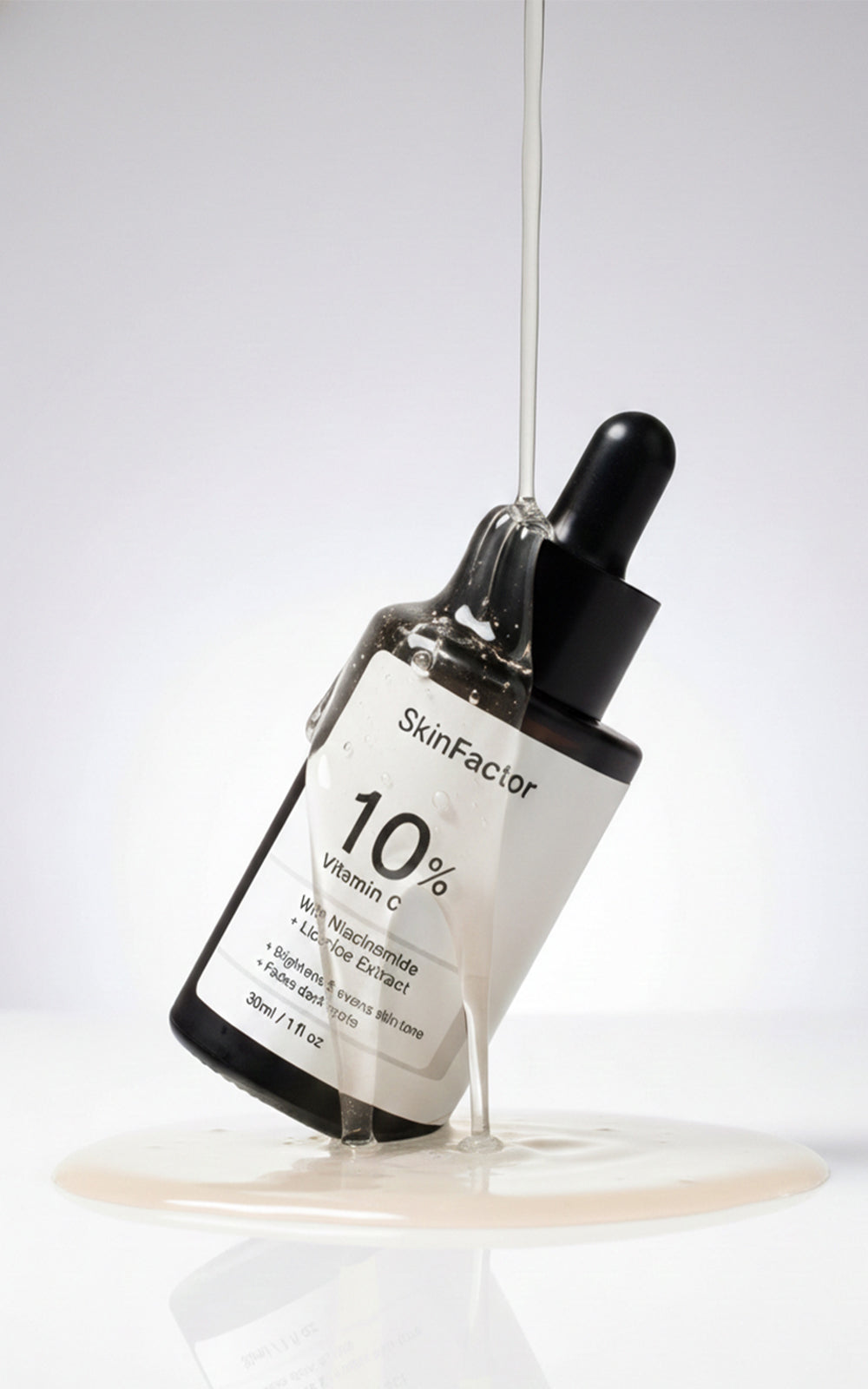
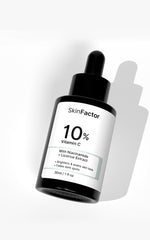
A 10% Vitamin C serum with stable Sodium Ascorbyl Phosphate that brightens skin tone, fades dark spots and neutralises UV damage every morning. The most effective antioxidant step for Pakistan's extreme UV conditions and heat — results visible in 4–6 weeks.
"First vitamin C serum that actually worked. My skin tone is genuinely brighter. — Fatima" —
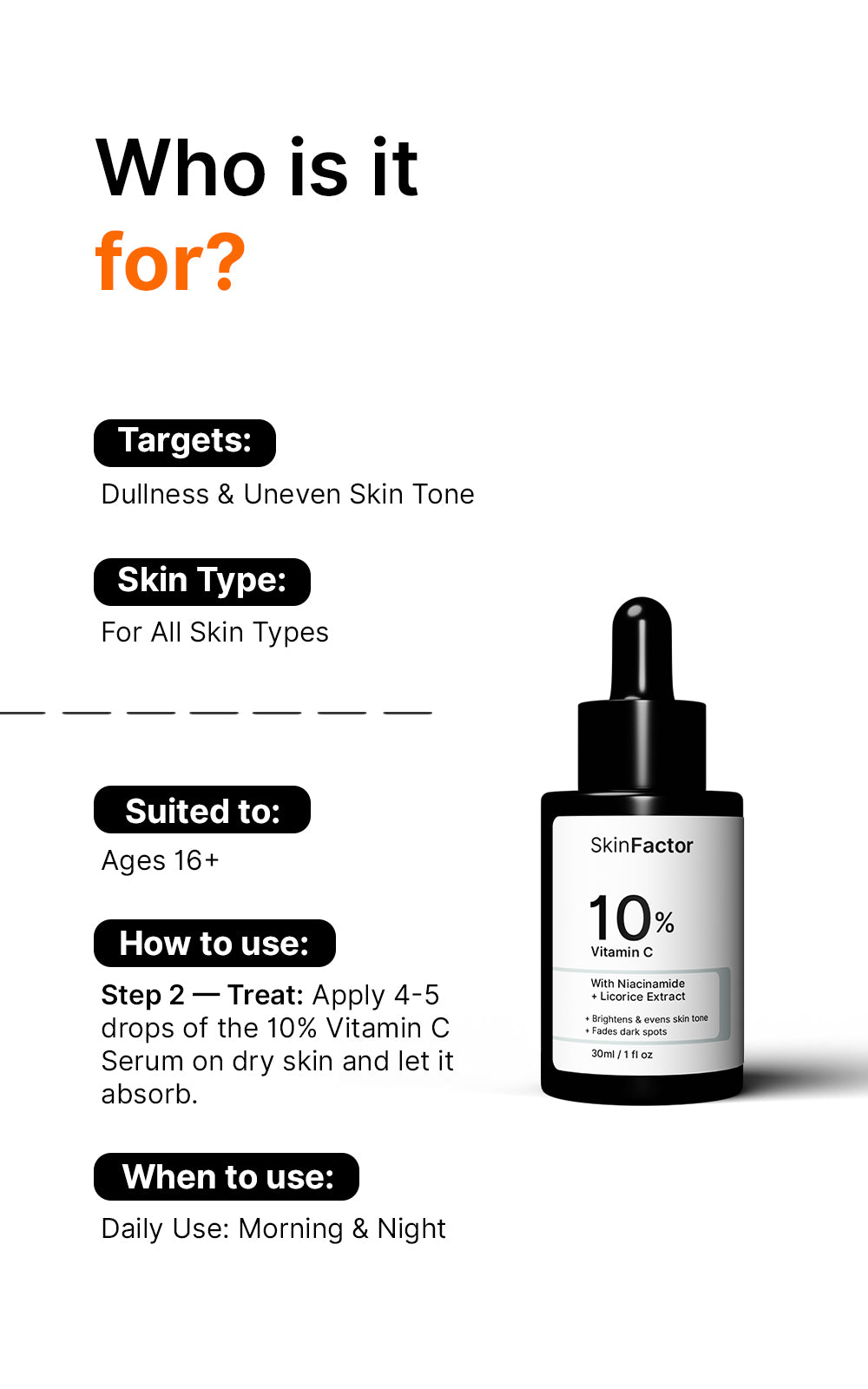
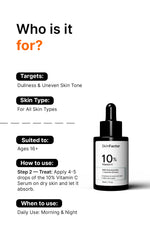
Skin Type: All skin types.
Targets: Dullness, dark spots and uneven tone.
Suited to: Ages 16+.
What to expect on first use: Mild tingling is normal in the first few applications and typically settles within a few days as your skin adjusts.
Patch test recommended if you have: very sensitive or reactive skin — patch test on your inner arm for 48 hours before full face use.
Do not use on: open wounds, active sunburn, or broken skin.
Consult your doctor before use if: you are pregnant or breastfeeding.
Best used alongside: SPF 50 every morning (non-negotiable) and Niacinamide Serum for enhanced brightening. Avoid combining with Retinol in the same routine — keep Vitamin C in the morning, Retinol at night.
STEP 1
Cleanse and pat skin completely dry.
STEP 2
Apply 2-3 drops of Vitamin C Serum to your face and neck. Gently pat until fully absorbed. Allow 60-90 seconds before your next step.
STEP 3
Follow with a moisturiser.
STEP 4
Finish with SPF 50 Sunscreen. This is the most important pairing on this page — SPF blocks UV, Vitamin C neutralises what gets through. Neither works as well without the other.
When to Use: Morning only. This is not a twice-daily product. Vitamin C's core function is neutralising UV-generated free radicals — with no UV exposure at night, that function is inactive and evening application does not add benefit.
Common mistake to avoid: Applying this serum at night thinking "more is better." Vitamin C's antioxidant mechanism specifically requires daytime UV exposure to work against — using it at night doesn't double your results, it simply skips the one time of day it's designed for. Use your evening routine for Retinol, Salicylic Acid or Kojic Acid instead.
Tip: Vitamin C pairs perfectly with Niacinamide Serum in the same morning routine — apply Vitamin C first, Niacinamide after. Do not use on the same night as Retinol — keep Vitamin C in the morning and Retinol at night for the best of both.
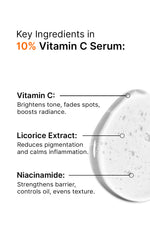
SkinFactor's 10% Vitamin C Serum delivers Sodium Ascorbyl Phosphate — a stable form of Vitamin C chosen specifically to resist the oxidation and heat degradation that causes standard Vitamin C serums to break down in Pakistan's climate. At 10%, this is the concentration where clinical evidence consistently shows results for brightening, dark spot fading, and antioxidant protection. Applied every morning before SPF, it is the highest-impact single step available for Pakistani skin managing UV-induced pigmentation and dullness — and one that stays effective bottle after bottle, even through Pakistan's summer heat.
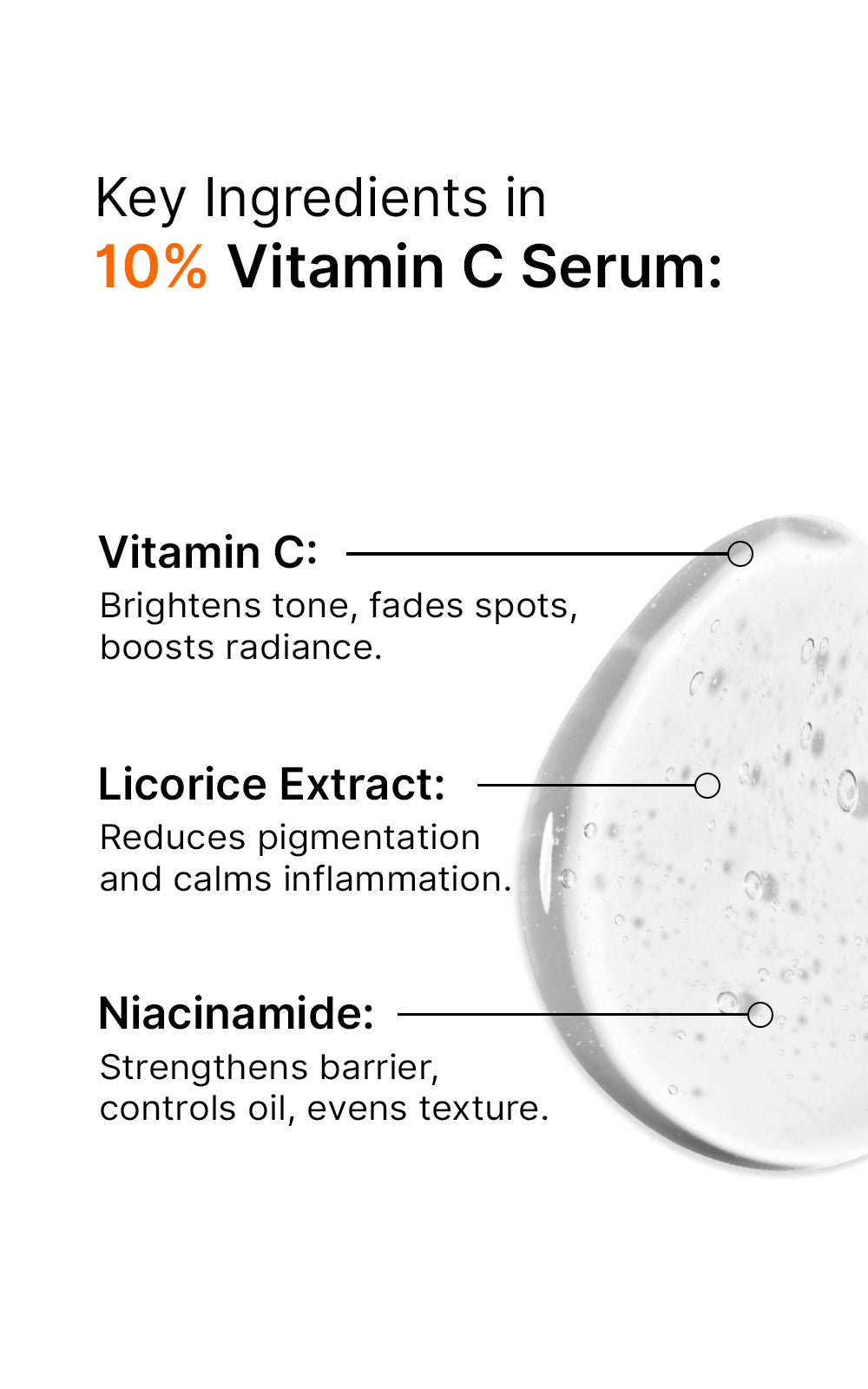
Three things 10% vitamin C serum does simultaneously:
Fades existing dark spots: Vitamin C inhibits tyrosinase — the enzyme that converts UV exposure and inflammation into melanin production. By blocking this enzyme, it reduces new melanin formation while existing hyperpigmented surface cells fade through the skin's natural turnover cycle. Post-acne marks, sun-induced patches, and general uneven tone all respond to consistent morning vitamin C use over six to eight weeks.
Neutralises UV damage in real time:
Pakistan's UV index sits between 8 and 11 for most of the year — among the highest sustained UV exposure of any major population. UV radiation generates free radicals that trigger melanocyte overactivation, collagen degradation, and inflammation throughout the day. Vitamin C applied before going outdoors neutralises these free radicals as they form — before they can trigger the downstream damage that creates new dark spots and accelerates skin ageing. This protective function only works in the morning. Applied in the evening when there is no UV exposure, it is entirely wasted.
Supports collagen production:
Vitamin C is a required cofactor for collagen synthesis — the process by which skin produces the structural protein that keeps it firm and elastic. Consistent morning application supports this process at the skin level, contributing to improved firmness and texture over sustained use.
Why Sodium Ascorbyl Phosphate — not L-Ascorbic Acid:
Most Vitamin C serums are built around Sodium Ascorbyl Phosphate Acid because it is the most researched form — but it comes with a real practical cost. L-Ascorbic Acid oxidises quickly once a bottle is opened, especially in hot climates, turning brown and losing potency within weeks unless stored in a fridge and used up fast. In Pakistan's heat — where a bottle might sit in a hot bathroom, a warm shipping container, or direct sunlight on a shelf — that instability means many L-Ascorbic Acid serums are already degraded before they even reach the skin they're meant to treat.
This serum uses 10% Sodium Ascorbyl Phosphate instead — a stable Vitamin C derivative that resists oxidation and heat degradation far better, without sacrificing brightening performance. It delivers the same core benefits — fading dark spots, evening skin tone, antioxidant protection against UV and pollution — while actually surviving Pakistan's climate long enough to work. A serum that stays potent in your bathroom cabinet through a Lahore summer is more useful than one that promises a marginally faster result on paper but oxidises into an inactive brown liquid within a month.
The morning + SPF combination:
Vitamin C and SPF work better together than either does alone. SPF physically blocks UV radiation from reaching the skin. Vitamin C neutralises the free radicals generated by any UV that gets through. In Pakistan's extreme UV conditions, this morning pairing is the most effective daily protection against the new pigmentation that would otherwise undo the brightening results the serum is producing.
How to use:
Apply to clean, dry skin every morning after cleansing. A pea-sized amount covers the full face. Allow 60 to 90 seconds to absorb before moisturiser. Follow with SPF 50 as the final morning step. Do not apply in the evening — the antioxidant function that makes vitamin C uniquely valuable is inactive without UV exposure to neutralise.
For the complete morning brightening routine — all steps, product order, and results timeline — read the complete vitamin C guide for Pakistani skin and the complete vitamin C routine. To understand whether vitamin C or kojic acid is the right treatment for your pigmentation concern, read the kojic acid vs vitamin C comparison.
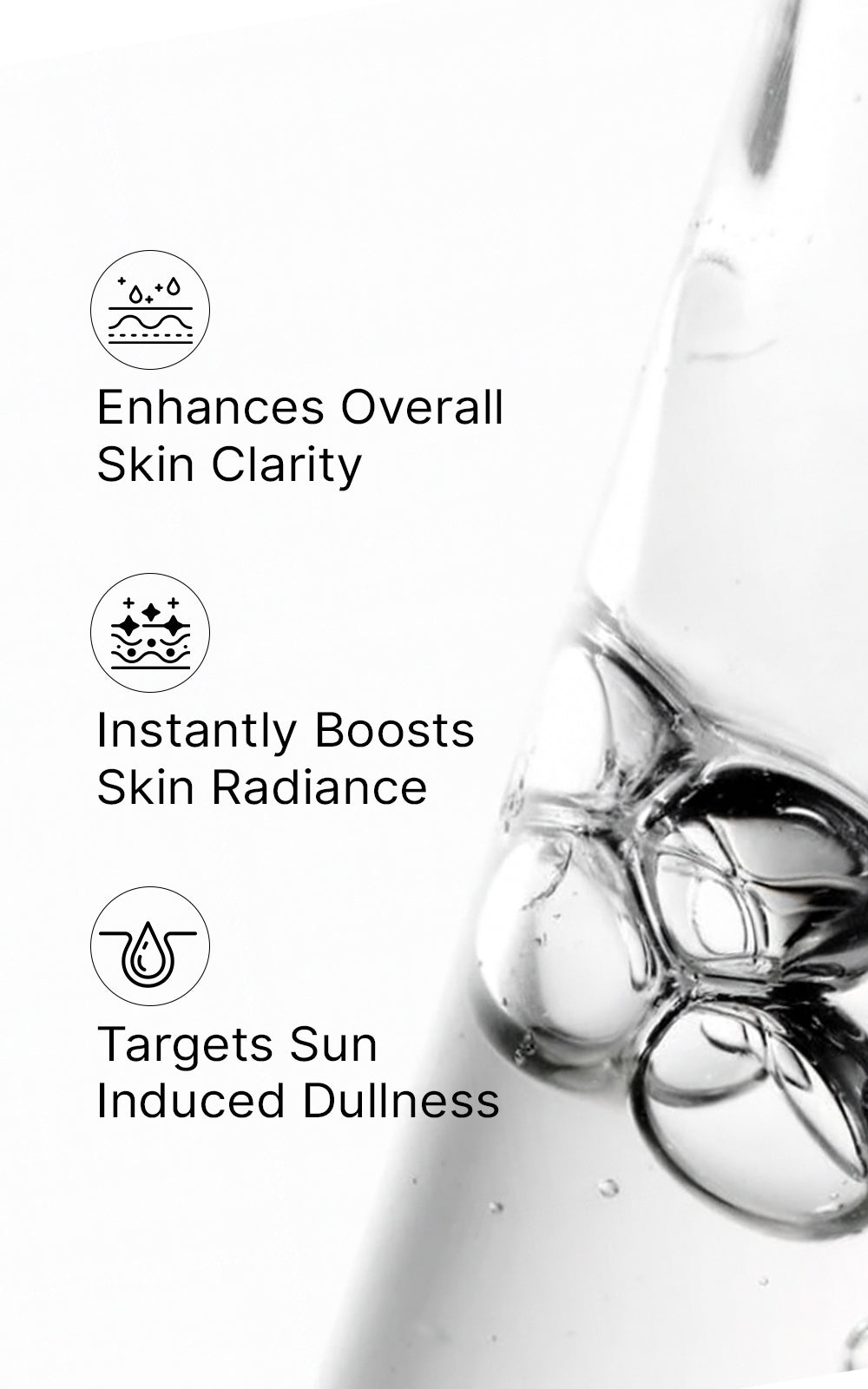
Stable Vitamin C neutralises daily UV and pollution damage while fading dark spots — without breaking down in Pakistan's heat.
Antioxidant protection compounds with every morning application.
Early radiance improvement becomes noticeable in daylight.
Sustained morning use fades existing pigmentation over time.
| Timeframe | What Changes |
|---|---|
| Week 1-2 | Mild tingling on first use is normal and settles within days. |
| Week 2-3 | Visible glow, particularly noticeable after sun exposure. |
| Week 6-8 | Significant improvement in dark spot fading and tone evenness. |
| What Affects Results | Morning use only — apply before SPF 50 for maximum antioxidant defence. |
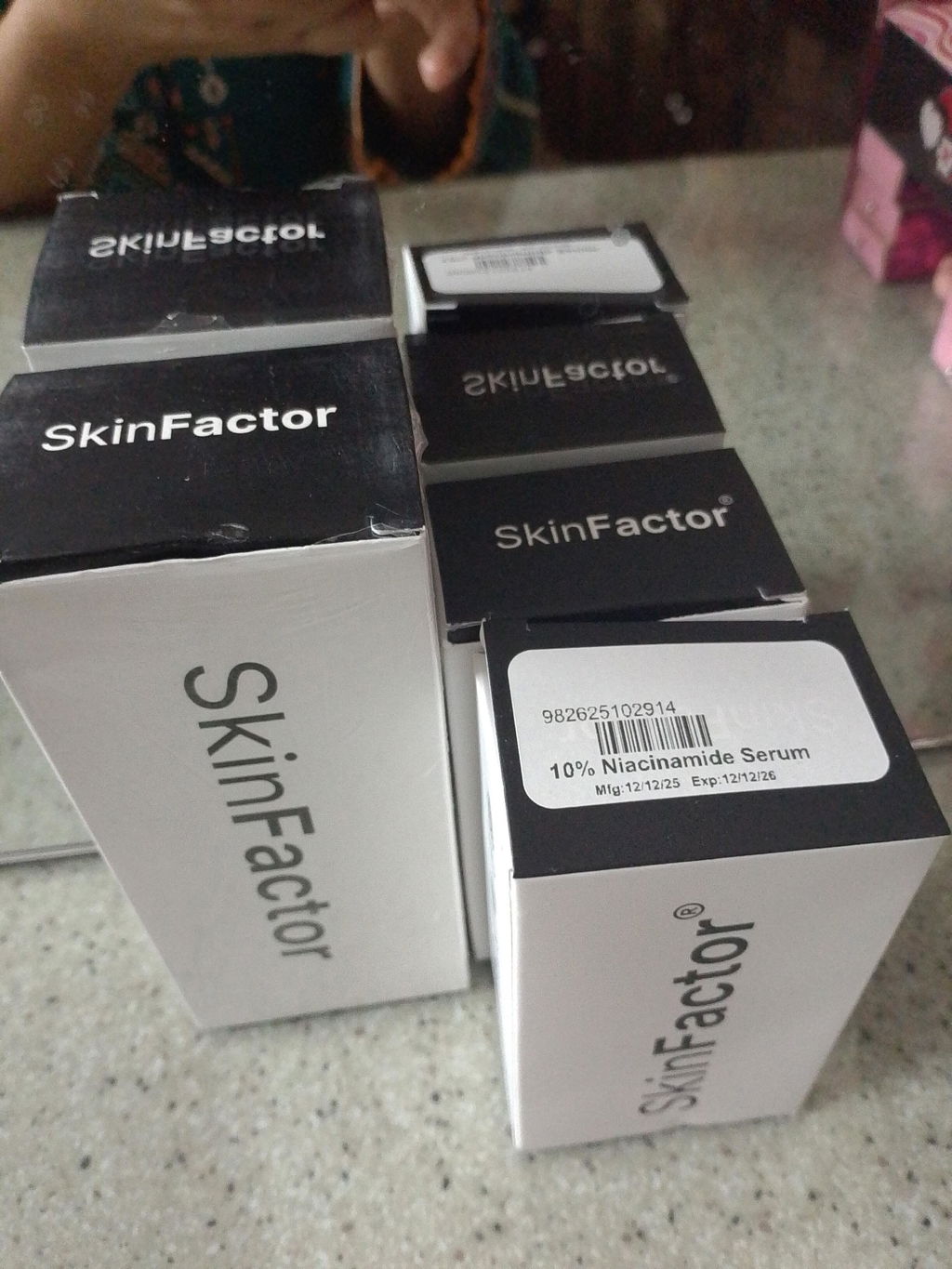
I bought this serum from skin factor first of all their delivery service is so fast secondly the packaging is very aesthetic and the main point the product is really amazing 😍 10000% recommended. Stop wasting money on other brands and try this vitamin c serum ❤️
Hi Iqra, thank you so much for your wonderful review! We're thrilled you love the Vitamin C Serum and appreciate your high recommendation. Looking forward to serving you again!
Did wonders for my skin
Behtarin vitamin c cleanser
Hi Zeeshan, we're thrilled to hear you love the Vitamin C 2% Gel Cleanser! Thank you for your wonderful review and support. Enjoy your skincare routine!
Honestly, it's been a week and I haven't seen any kind of results....but I'll judge it for at least a month
Hi there! Thanks for sharing your experience. Sometimes skincare results take time, so we appreciate your patience. Please feel free to reach out if you have any questions or need further advice. We're here to help!
It's amazing results
Hi Saliha, we're so glad to hear you're happy with the results! Thanks for sharing your experience with our Vitamin C Serum.
Munasaheb kimat mein behtarin serum hai vitamin c serum
Hi Zeeshan, thank you for your wonderful review! We're thrilled to hear you love the Vitamin C Serum. Your satisfaction means a lot to us. Enjoy your skincare routine!
Really good cleanser! It leaves my skin feeling fresh, clean, and soft without making it feel too dry. I also like the refreshing Vitamin C feel. ✨Highly recommended ⭐⭐⭐⭐⭐
It's not much rapidly absorbing,liquid and non sticky
Hi Saba, thank you for your feedback! We're glad you find the serum liquid and non-sticky. If you have any suggestions for improvement, we'd love to hear them. Appreciate your support!
It brighten up my skin within a week,very effective,can I use it in pregnancy?
Hi there! We're glad to hear the serum is working well for you. During pregnancy, it's best to consult your healthcare provider before adding new skincare products. Thanks for your trust in SkinFactor!
It made my skin smoother than before
Hi there! We're so glad to hear the serum made your skin smoother. Thank you for sharing your experience with SkinFactor!
Just average
Hi there, thank you for your feedback. We're glad you found the Vitamin C Serum to be satisfactory. If you have any suggestions or questions on how we can improve, please let us know!
Excellent quality,
It worked well for my skin, but individual results can vary.
Hi there! We're so glad to hear you enjoyed the quality of our Vitamin C Face Cream. Thanks for sharing your experience, and feel free to reach out if you need anything else!
Best Kit ❤️
Very hydrating 🫶🏻
Non comedogenic,non greesy,oil free moisturiser
I love it 💓
Using this Vitamin C serum daily and my acne marks are slowly disappearing. Very lightweight too!
It'ssooo good
I love that it’s light yet very hydrating. Perfect for summers!
Really good 😍Highly recommended
It is a good cleanser
Good quality
MashaAllah really best products ever I use with best results ✅
100% recommend
Perfect brightening duo skin looks fresh,
Love this combo!
Good
Excellent
Good product
I am ues this product zabrdast results mila is ka skin shine & glow
This is amazing for glow skin & shine skin
The formulation is very good and it does notleave the skin dry. Good product
Good experience
Amazing results..
Good bundle for everyday use.